
Building a Modern Financial Literacy Curriculum for Secondary Schools
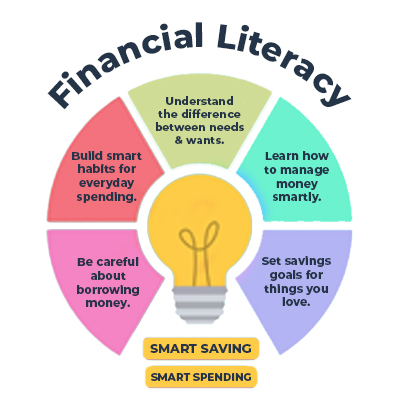
As a team of UK SCITT-trained educators, we’ve seen firsthand how a robust financial curriculum can transform students’ confidence with money. Yet, we’ve also witnessed the gaps and anxieties that emerge when this education is fragmented or absent. In today’s complex economic landscape, where digital transactions are the norm and financial risks are often glamourised online, our responsibility extends far beyond traditional maths problems. This article draws on our collective experience within UK teacher training to map out a practical, cross-curricular approach to financial literacy, one that prepares students for the real-world challenges of budgeting, risk assessment, and navigating a commercialised digital world.
Why Financial Education is Non-Negotiable for UK Teens
The case for comprehensive financial education in schools is not merely persuasive—it’s statutory. In England, financial education is a statutory part of the National Curriculum for Citizenship, covering topics from income, expenditure, and budgeting to managing risk and understanding financial products. Despite this mandate, delivery remains inconsistent. A sobering 2023 survey from the Money and Pensions Service (MaPS) revealed that only 47% of 7-17 year olds receive meaningful financial education at school. This patchwork provision correlates directly with worrying trends in young people’s financial resilience, leaving many ill-equipped for adulthood. As educators undergoing or delivering UK SCITT training, we have a unique opportunity to champion this statutory requirement, ensuring it moves from a box-ticking exercise to a transformative, life-skills programme that addresses a clear and pressing need.
Core Pillar 1: Personal Budgeting and Economic Citizenship
This pillar grounds students in the fundamental mechanics of managing money and understanding their role in the economy. It moves from abstract concepts to lived experience, using practical simulations and familiar technology.
Simulating the Real World: The ‘Independent Living’ Project
A cornerstone activity involves students building a detailed monthly budget for living independently in a nearby city, like Manchester or Bristol. Using real data from Spareroom, Rightmove, and supermarket websites, they must account for rent (including a deposit calculation), utility bills, groceries, transportation (using local bus/train fares), and council tax. This project forces engagement with unavoidable financial realities, fostering discussions about needs versus wants, the true cost of living, and the stark reality of minimum wage versus living wage calculations.
Digital Finance: Navigating Apps and Online Security
Ignoring the digital banking revolution does students a disservice. We can use the features of platforms like Monzo’s pots for savings goals or Starling’s spending categorisation to teach budgeting in a format they recognise. Critically, this must be paired with lessons on online security: recognising phishing attempts related to “bank alerts”, the importance of strong, unique passwords, and the dangers of sharing financial details, even with friends. This demystifies digital tools while embedding safe practices.
Core Pillar 2: Teaching Probability with Engaging Contexts
Probability is a core GCSE Maths topic that students often find abstract. Using the structured mathematics behind casino games provides a compelling, high-interest context to make concepts like expected value, relative frequency, and combined events tangible—without ever endorsing gambling.
From Classroom Theory to Casino Maths
Instead of endless rolls of a standard die, introduce the game of Craps. Students can calculate the probability of rolling a 7 (the most common outcome) versus a 2. Exploring roulette offers a rich vein of analysis: what is the probability of red? Of a specific number? Of an odd number? This directly applies set theory and fractional/ decimal probability. These activities are powerful tools within a maths teacher’s arsenal, directly linking to exam board specifications through unforgettable applications.
Calculating Risk: The Mathematics of ‘The House Always Wins’
The most powerful lesson here is the concept of expected value and the house edge. Task students with calculating the expected return from a £1 bet on a single number in roulette (which pays 35:1). The mathematical truth—a negative expected value—reveals the unsustainable nature of gambling as an income strategy. This isn’t moralising; it’s cold, hard maths. As the National Numeracy Charity highlights, the link between financial confidence and maths skills is undeniable. Understanding probability is foundational to assessing financial risk, from insurance to investment, making this a critical transferable skill.
Core Pillar 3: PSHE and the Reality of Responsible Gambling
Within PSHE, financial education must tackle the public health issue of gambling head-on. With the rise of in-game loot boxes, social media betting ads, and influencer promotion, a proactive, evidence-based approach is essential.
Beyond the Glamour: Gambling as a Public Health Topic
Framing gambling alongside other risk-based behaviours is effective. Discuss the neuroscience of randomness and reward, explaining how ‘near misses’ in slot machines or skin-opening simulations are designed to hook the brain. Use statistics from the UK Gambling Commission’s ‘Youth and Gambling’ report, which tracks worrying trends in underage gambling behaviour, to ground the discussion in local reality. Excellent, ready-made resources for this are provided by the Young Gamers & Gamblers Education Trust (YGAM), whose materials are now used in over 10,000 UK educational settings.
Critical Analysis of Advertising and Influencer Culture
Students must become media-literate critics of gambling advertising. Deconstruct a televised betting advert: how does it use glamour, camaraderie, and the illusion of control? Analyse the small print on ‘free bet’ offers. More urgently, scrutinise the role of social media influencers paid to promote betting apps or casino sites. A practical lesson can involve creating a counter-message public health campaign, empowering students to articulate the risks their peers might not see.
Cross-Curricular Integration and Assessment Ideas
For financial literacy to stick, it must be reinforced across the school. Siloed learning in Citizenship alone is insufficient. Here are ways to create a whole-school culture and assess understanding practically:
- Mathematics: Calculate and compare the true cost of payday loans versus bank loans using APR. Analyse compound interest in savings and debt.
- Enterprise/ Business Studies: Develop business plans with realistic cash-flow forecasts, profit margins, and loan repayment schedules.
- Computing: Code a simple budget calculator or simulate the long-term returns of different savings strategies.
- English/ Media: Analyse the persuasive language used in financial advertising or write a formal complaint to a bank about a disputed charge.
Assessment should mirror this practical focus. Move beyond essays to authentic tasks:
- Produce a budget vlog for a fictional graduate’s first month in a new job.
- Create a ‘Financial Myth-Busting’ pamphlet for Year 11 students, explaining student finance, council tax, and rental contracts.
- Design and present a balanced argument for a classroom debate on a topic like “Should gambling advertising be banned in football?”
We must equip educators with the confidence and tools to deliver these vital lessons. This means incorporating robust financial education and responsible gambling awareness into core UK SCITT training and ongoing teacher CPD. By embracing a cross-curricular, practical, and evidence-led approach, we can prepare our students not just for exams, but for life—fostering a generation that is financially capable, critically aware, and resilient to risk.