
Teaching Probability and Statistics: Real-World Examples from Casinos
During my UK SCITT training, I watched a room of trainee teachers’ eyes glaze over at the mention of ‘probability distributions’. The following week, I brought in a miniature roulette wheel. The change was instantaneous. Suddenly, abstract concepts became tangible debates: “Is red really as likely as black?” and “What are the actual odds of hitting a single number?” This experience cemented a powerful truth: engagement soars when maths connects to the real world. Using casino games as a framework for teaching probability and statistics is not about endorsing gambling; it’s about leveraging a high-stakes, mathematically pure environment to demystify core principles of the UK curriculum. This approach not only brings maths to life but also provides a perfect segue into essential PSHE lessons on financial education and responsible gambling.
Why Casinos Are Perfect Probability Labs
Casinos are not temples of luck; they are meticulously engineered businesses built on immutable mathematical laws. Every game, from the spin of a roulette wheel to the deal of a card, is a lesson in probability, statistics, and expected value. This makes them unparalleled ‘probability labs’ for the classroom. They offer clear, finite outcomes and calculable odds, removing the ambiguity that often clouds mathematical concepts. For a tangible UK example, consider The Hippodrome Casino in London. Its operations, from the payout ratios on its roulette tables to the strategic layout of its gaming floors, are all dictated by statistical certainty. By analysing these environments, students learn that casinos are businesses that win through mathematics, not chance—a crucial insight for both their numeracy and financial literacy.
Core Probability Concepts Through Casino Games
Casino games provide a structured way to introduce and reinforce foundational probability concepts. Moving from simple dice to more complex card games allows for a scaffolded learning journey that builds understanding progressively.
Roulette and Probability
The European roulette wheel, with its 37 pockets (numbers 1-36 and a single zero), is a pristine model for teaching basic probability. Students can easily calculate the probability of various events:
- Probability of Red: 18/37 ≈ 48.6%
- Probability of a Single Number: 1/37 ≈ 2.7%
- Probability of an Even Number: 18/37 ≈ 48.6%
These clear fractions illustrate fundamental principles like sample spaces, mutually exclusive events, and how probability is expressed as a value between 0 and 1.
Blackjack and Decision Trees
Blackjack introduces the concept of dependent probability and strategic decision-making. Unlike roulette, the odds change as cards are removed from the deck. This is an excellent way to teach conditional probability and decision trees. Students can map out the outcomes of choices like ‘hit’ or ‘stand’ based on their hand and the dealer’s visible card. This moves probability beyond simple calculation into the realm of predictive modelling and risk assessment—key skills in financial decision-making.
Dice Games and Expected Value
Games like Craps, or even a simple roll of two dice, perfectly illustrate ‘expected value’—the average outcome of an experiment over many trials. For instance, if you bet £1 on rolling a 7 (which has a probability of 6/36 or 1/6), a fair payout would be £6. Any payout less than £6 gives the ‘house’ an edge. Calculating the expected value of different bets shows students mathematically why some wagers are statistically worse than others, a concept directly applicable to evaluating any financial risk or insurance product.
Understanding Statistics and the House Edge
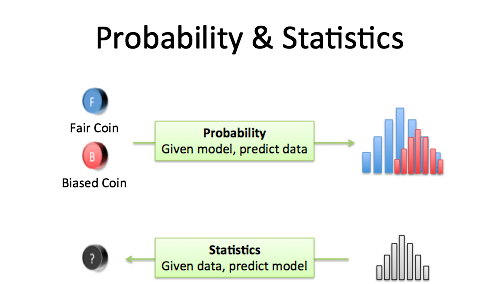
While probability deals with predictions, statistics analyses what actually happens. Casinos rely on this distinction. The ‘house edge’ is the statistical guarantee that, over time, the casino will retain a percentage of all money wagered. It is the ultimate lesson in long-term statistical variance versus short-term luck.
Calculating the House Edge
The house edge is the mathematical advantage built into the game rules. Using European roulette, bet on a single number pays 35:1, but the true odds are 36:1 (as there are 37 numbers). The house edge is calculated as: (1/37) * 35 – (36/37) * 1 = -1/37 ≈ -2.7%. This means for every £100 bet, the casino expects to keep £2.70 on average. Contrast this with American roulette (with a 0 and a 00), where the edge jumps to 5.26%. This simple comparison teaches students how small statistical advantages, when applied over millions of transactions, yield enormous profits—a principle used by everyone from bookmakers like Bet365 to high-street banks.
Statistical Variance in Gambling
Variance explains why a player can win big in one session (a short-term statistical outlier) while the casino remains profitable in the long run. Simulating 10,000 spins of a roulette wheel in class, perhaps using spreadsheet software, will vividly demonstrate this. Students will see winning streaks and losing streaks, but the cumulative results will inevitably trend towards the house edge. This separates mathematical fact from anecdotal experience, teaching critical thinking about data and ‘hot streaks’.
Integrating Responsible Gambling into PSHE
This mathematical foundation provides the perfect, evidence-based platform for mandatory PSHE education on responsible gambling and financial risk. Understanding the cold maths behind games of chance is the most effective antidote to misunderstanding and harm.
PSHE Curriculum Links
The UK’s PSHE curriculum explicitly includes education on the risks associated with gambling and debt. Lessons on probability and the house edge directly fulfil the requirement to teach students to “make informed financial decisions” and “manage risk”. By first proving the house always wins mathematically, teachers can frame gambling not as a potential career or income source, but as a form of expensive entertainment with a guaranteed net cost, aligning with the National Curriculum’s aims for personal financial education.
Resources from GamCare
Organisations like GamCare, the leading UK provider of information, advice, and support for gambling harms, offer excellent free resources for schools. Their outreach programmes and lesson materials help translate the maths into personal and social understanding. Teachers can use GamCare’s real-life case studies (anonymised) to discuss the social and emotional consequences when the statistical realities are ignored, creating a powerful, cross-curricular learning experience that links maths, PSHE, and citizenship.
Practical Classroom Activities for UK Teachers
Translating this theory into engaging lessons is straightforward with a few well-designed activities. The key is to emphasise the maths and the learning, not the gambling context itself.
Simulation Games
Run a classroom ‘casino day’ using chips with no real monetary value. Set up stations for roulette (using a spinner), dice games, and a simplified blackjack game. Task students with:
- Calculating the probability of winning for each bet before playing.
- Recording their results over 50 trials.
- Comparing their actual results (statistics) with their predicted probability.
- Calculating the house edge for each game based on the rules you set.
Resources from the National STEM Centre and platforms like TES (Times Educational Supplement) offer pre-made lesson plans and simulation tools for this exact purpose.
Assessment and Discussion Points
Move beyond calculation to critical analysis. Effective discussion prompts include: “If the house always has an edge, why do people gamble?”; “How do bookmakers like Bet365 use similar mathematics to set odds?”; and “How can understanding expected value help you evaluate a lottery ticket, a phone insurance contract, or a ‘buy now, pay later’ scheme?” This connects the activity directly to financial literacy. Assessment can focus on the accuracy of their probability calculations, the depth of their statistical analysis of results, and the quality of their reasoning in the responsible gambling discussion.
Using casino examples to teach probability and statistics offers an unmatched blend of engagement, practical application, and mathematical rigour. It transforms abstract numbers into a compelling narrative about how the world works, from games to global finance. More importantly, it arms students with the quantitative critical thinking skills necessary for modern financial literacy, seamlessly linking the maths curriculum to vital PSHE education on risk and responsibility. By grounding the lessons in concrete maths, we empower the next generation to make informed decisions, both at the table and in their wider financial lives.